

![Pet Store Merchandising: 7 Proven Tips to Boost Sales [2026]](https://etailpet.io/hubfs/_Blog/Blog%20Featured%20Images/eTailPet/12%2016%20Pet%20Store%20Merchandidising%20101%20%5BBLOG%5D.webp)


Should Your Pet Store Offer Subscription Services? 7 Considerations
Pet store sales in a slump?
Before you touch your product selection, look at how you're presenting it.
Merchandising is how you organize, display, and sell your products — and it's one of the fastest ways to boost revenue without buying a single new item.
Change how customers see and move through your store, and you'll sell more of what's already on your shelves. Let's break down exactly how to make that happen.
What Is Pet Store Merchandising?
Pet store merchandising is the strategic organization, display, and presentation of products to drive sales and improve the shopping experience in your pet store.
It covers how you group items, use endcaps and signage, and guide customers toward cross-sells and impulse buys. Get it right, and the same inventory sells for more.
7 Proven Pet Store Merchandising Tips
Here are seven pet store merchandising tips to get you started.
1. Group Products Logically

Make it easy for customers to find what they came for.
Start with departments by pet: dogs, cats, and so on. Then, break each department down by type, like food, treats, toys, grooming, collars, and leashes.
Signage does a lot of the work here. Hang signs above each section so shoppers can spot what they need without having to ask.
Try this:
- Group by pet first, then by product type, then by life stage or size if the category is big enough.
- Use consistent, readable signage above every section.
- Keep related categories physically close, like treats near food and grooming tools near shampoo.
- Walk the store as a first-time customer would and note anywhere you'd have to ask for help.
How a pet store point of sale (POS) helps: Category-based inventory tracking shows you how each section performs, so you know which groupings earn their shelf space.

2. Design a Smart Pet Store Flow
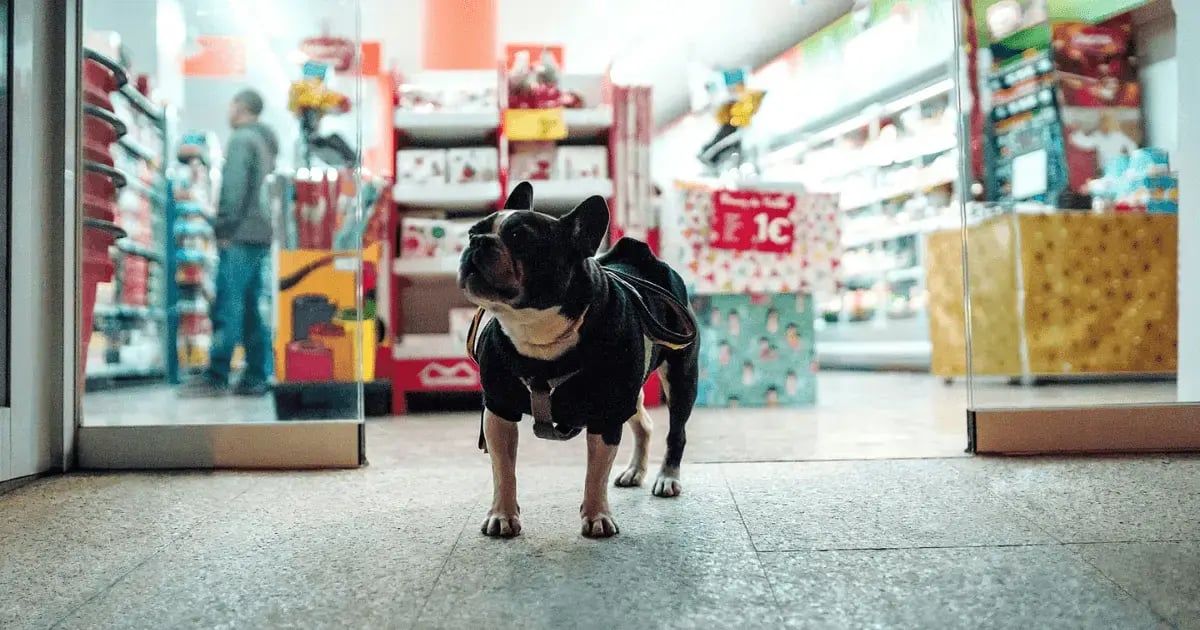
Guide customers through the whole store, not just the aisle they came for.
For example, if you put pet food in a back corner, customers who came in for a bag will pass toys, collars, and treats to get there. That walk is where the extra purchase happens.
Here are a few layout ideas worth testing:
- Place high-frequency purchases like food and litter at the back or far side of the store.
- Use a loop or racetrack path so customers naturally pass most departments.
- Break up long aisles with a feature table or display to slow shoppers down.
Related Read: Creating the Perfect Pet Store Layout: 7 Strategies
3. Set Up Endcaps
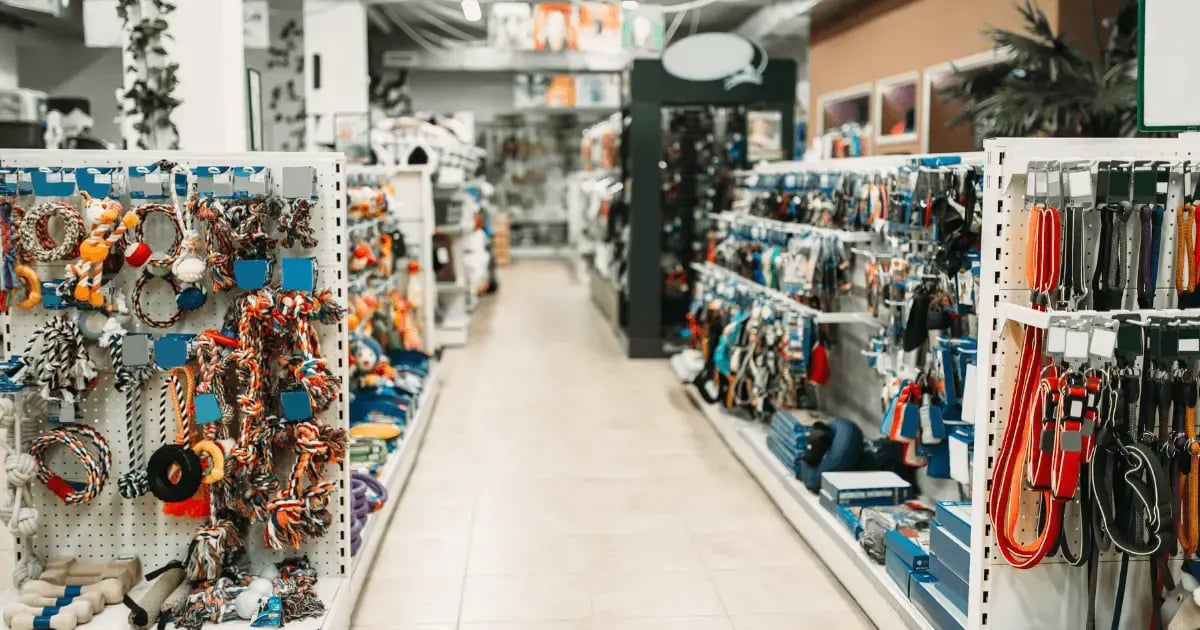
An endcap is the space at the end of a shelving unit. It doesn't hold much, but it's some of the most visible real estate in your store.
Good uses for it include:
- New arrivals
- Seasonal items
- Clearance
- Anything you test before committing shelf space to it
Rotate what's on your endcaps often — if it never changes, customers stop noticing it. You can start by swapping the display every two weeks and tracking whether sales moved before and after.

4. Use Cross-Selling
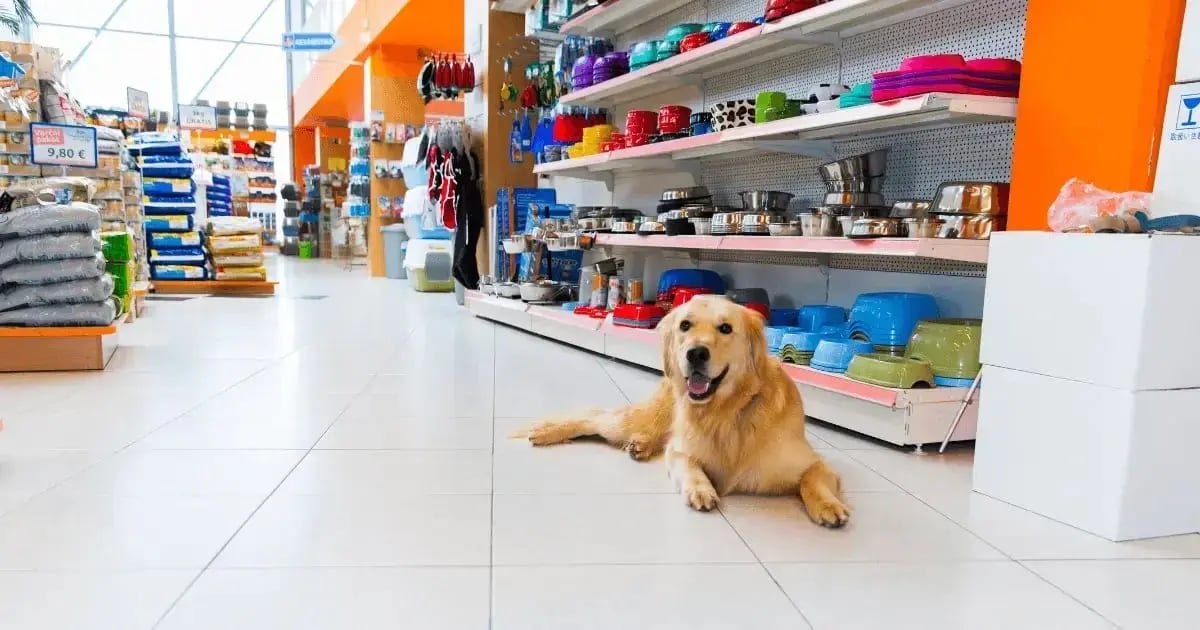
Cross-selling is placing items that tend to be bought together next to each other. For example, dog food by bowls, leashes by collars, and shampoo by brushes.
Bundling takes this a step further. You can group items together, usually at a discount, so customers buy the set instead of piecing it together themselves. For example, a new dog owner bundle (bowl, food, collar, leash, chew toys) or a travel kit (food, treats, bowl, meds, harness). Customers get convenience and a better price, and you get a bigger sale.
Here are some pairings and bundles to start with:
- Food and bowls, or food and storage containers
- Collars, leashes, and harnesses displayed together
- Shampoo, brushes, and towels near the grooming section
- A "new pet starter kit" bundle near the entrance or checkout
How a pet store POS helps: Built-in bundling tools let you package items like a new pet kit or travel set and track them as a single line item, margins and all.
Related Read: New Pet Checklist: 50 Essentials To Stock in Your Pet Shop
5. Add Impulse Buys
.webp?width=1200&height=630&name=Pet%20Guide%20Option%202%20(1).webp)
Impulse buys are small, cheap items placed right at checkout.
They usually carry higher margins than the rest of your store, so selling more of them lifts your overall margin, too.
Popular impulse-buy items for pet stores include:
- Individually wrapped treats
- Dental sticks and chews
- Small grooming tools, like nail clippers or brushes
- Collars, bandanas, and other small accessories
- Portable water bottles and travel bowls
Rotate the lineup regularly so it doesn't go stale, and keep prices low enough that grabbing one feels like an easy yes.
6. Showcase Top Sellers
%20BLOG.webp?width=1200&height=630&name=Best%20FranPOS%20Alternatives%20for%20Pet%20Stores%20(2026)%20BLOG.webp)
Every store has a handful of products that outsell everything else. Put them front and center instead of letting them blend in with the rest of the shelf.
Here’s how to make top sellers stand out:
- Keep them at eye level on shelves rather than up high or down low.
- Add a "most popular" or "staff pick" tag so customers notice without you having to say anything.
- Feature one near the entrance as a first impression, and swap it out as your top performers shift.
- Pair a top seller with a related cross-sell or bundle to boost the basket even further.
Related Read: 7 Pet Industry Trends To Watch in 2026
7. Adjust Merchandising Strategy Based on Data

Don't treat merchandising as something you set once and leave alone.
Use your sales data to see what's moving and what's sitting. If a product isn't selling, it might just need a new spot: a dedicated display, an endcap, or a pairing with something it cross-sells well with.
Here are some metrics worth keeping an eye on:
- Sales by section or category, to spot which groupings are underperforming
- Sell-through rate on endcap and impulse-buy items
- Which bundles or cross-sells are being purchased together
- Sales before and after any merchandising change, so you know what works
Test one change at a time, whether it's new signage, a new bundle, or a different endcap — and give it a few weeks before drawing conclusions.
How a pet store POS helps: Sales reporting shows you exactly which products and sections are underperforming, so you know where to test a change first.
Improve Pet Store Merchandising With eTailPet
The same inventory, presented differently, can sell a lot more. Experiment with different merchandising methods and pay attention to what moves the needle — you may find cross-selling and impulse buys outperform endcaps, or the reverse.
To know for sure, you need a POS system that tracks sales data and puts it in front of you in a way you can use.
eTailPet is an all-in-one POS built for pet stores. Detailed sales reports back up your merchandising decisions, and integrated payment processing, inventory management, e-commerce, and access to top pet store suppliers cover the rest of the business.
Want to know how much it costs for a new, custom pet store POS system? Use the Build and Price tool to find out today.
Pet Store Merchandising FAQs
What is pet store merchandising?
Pet store merchandising is how you organize, display, and present products in your pet store to improve the shopping experience and increase sales.
What's the difference between pet store merchandising and inventory management?
Merchandising is about how products are presented and displayed. Inventory management is about tracking what you have, what's selling, and what to reorder. The two work together — good merchandising decisions depend on solid inventory data.
How often should I change my pet store's merchandising?
Rotate endcaps and impulse-buy sections regularly to keep them fresh, and revisit your broader layout and product groupings every few months based on sales data.

With eight years in POS software, Taylor specializes in creating solutions tailored to pet retailers. His insights into industry trends — like the growing demand for premium pet foods and creating an online presence — help small businesses adapt to changing consumer preferences. As a pet owner himself, Taylor understands the personal connection that sets local pet stores apart from big-box retailers. This firsthand experience drives his mission to equip independent pet stores with technology that highlights their unique advantages. "I love backing small businesses because shopping locally is personal and fulfilling. My goal is to give pet retailers the tools they need to stand out against the bigger chains. There’s nothing like walking into a store where they know my pet’s name and what they like!"